We have always really enjoyed the various elementary science curriculum offerings from Apologia. Recently, we were sent a collection of Exploring Creation with Human Anatomy and Physiology items to review. We received the textbook, a notebooking journal, a junior notebooking journal, and a companion mp3 audio CD. I decided to take a break from the other Apologia curriculum I was using with my 2nd and 5th grade sons to give this one a go. They are learning so much.
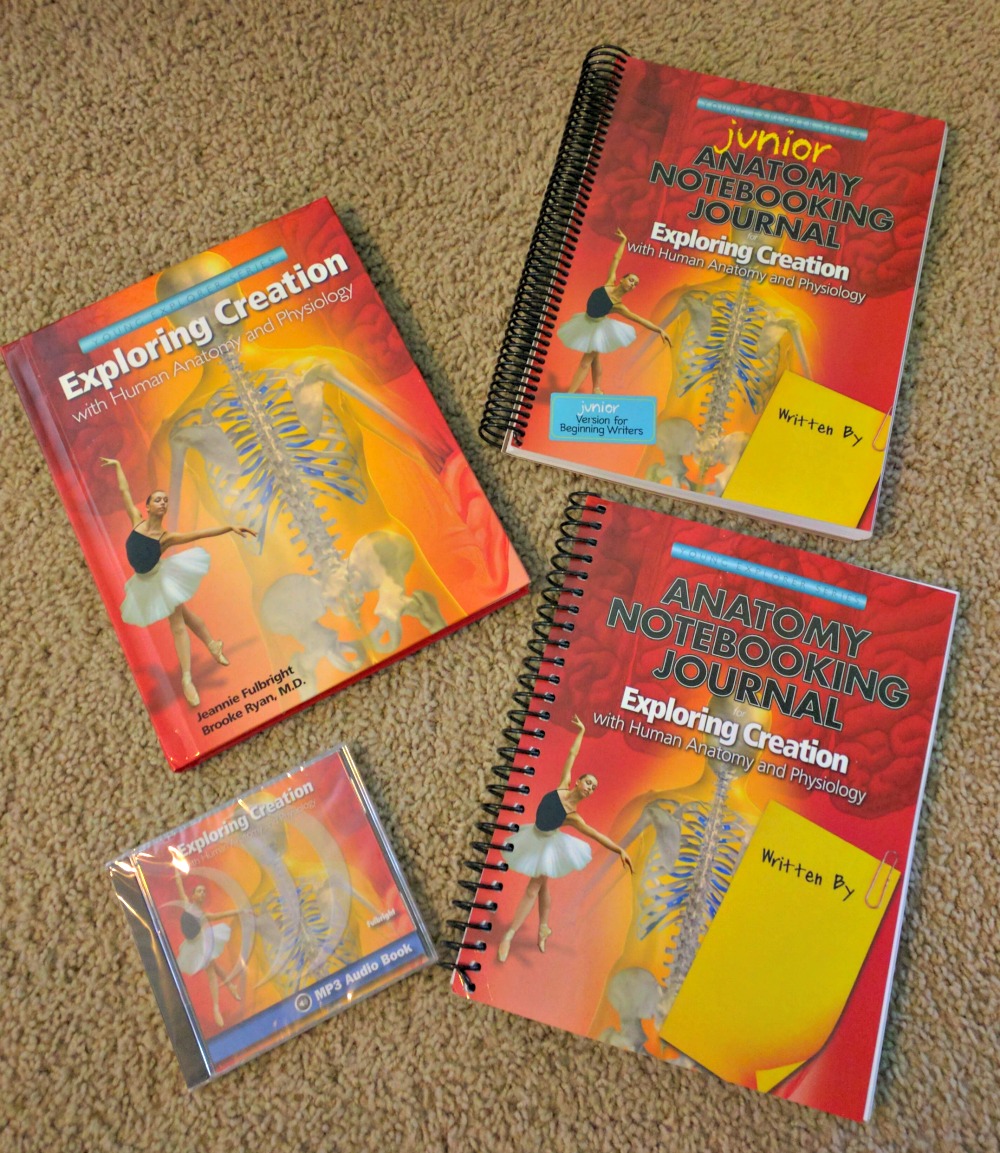
As I mentioned, we received all of the components of the curriculum
- Exploring Creation with Human Anatomy and Physiology Text
This hardcover textbook is 265 full-color pages. The book is divided up into 14 different lessons, including Introduction to Anatomy and Physiology, The Skeletal System, The Muscular System, The Digestive and Renal Systems, Health and Nutrition, The Respiratory System, Life in the Blood, The Cardiovascular System, The Nervous and Endocrine Systems, The Nervous System Extended, Your Senses, The Integumentary System, The Lymphatic and Immune Systems, and Growth and Development.Each lesson has a variety of activities and review for your elementary students to complete. Scattered throughout the reading, there are “Try This!” activities that can be done quickly and without many supplies, such as measuring how many pounds of muscles you have based on your current weight, or seeing what acid can do to your teeth by sticking an old tooth in some soda for a few days. These were a big favorite of my kids.At the end of the lessons, there are several “What Do You Remember?” questions. These are a review from the lesson and would be simple to do orally if needed, or on a separate sheet of paper, or you can also find them in the Notebooking Journal if you choose to purchase one. At the end of the chapters, there is also a section called “Notebooking Activities”, which gives you more extension activities to assign your child to further explore the concepts of the lesson.This book has students creating a “Personal Person Project” where they get to build a person by adding layers of different systems of the body, such as bones, blood, muscles, and so on. In addition, there are plenty of projects and experiments that go along with the text and really bring it to life. In fact, the first big experiment that students get to do in the book is to make an edible cell, which is made of mainly Jell-O and candy. That’s one way to hook a kid into a curriculum! 🙂
The end of the book has answers to the Narrative Questions, so you can make sure your students are on the right track with their answers. The book also gives you access to some extras at a special course website to supplement as well if your students want to learn even more from more sources.
The textbook does not have a specific daily or weekly schedule, but it does say that each Lesson should be able to be broken up into about 2 weeks worth of work.
If you can only buy ONE thing for this curriculum, this text book is it! The following items are amazing tools that make life so easy, but the textbook can be used on its own if money is tight.
- Exploring Creation with Human Anatomy and Physiology Junior Notebooking Journal
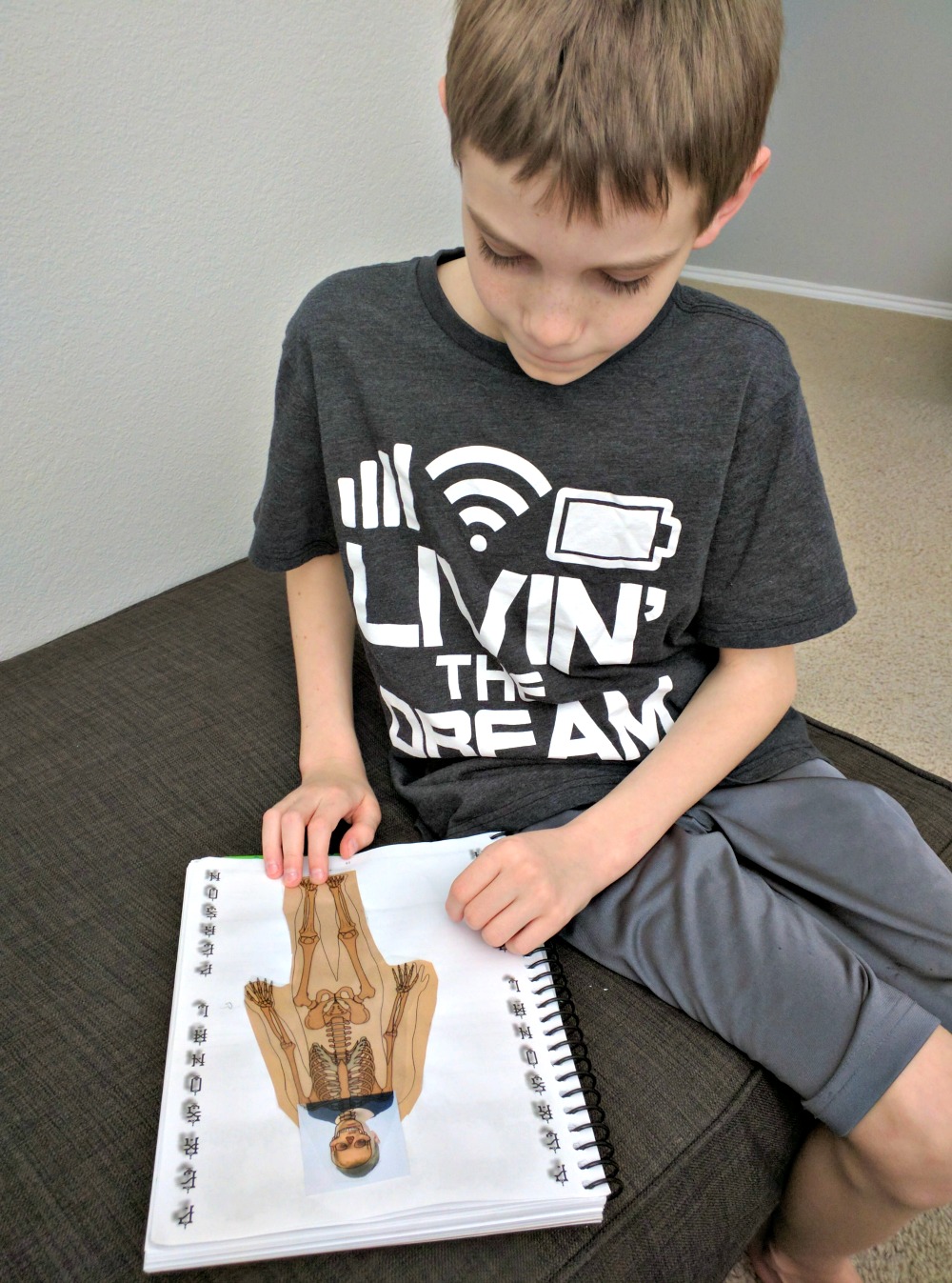
This optional component to the program is so convenient. It also has a schedule at the front of the journal to help you pace your lessons from the book and journal into a 2 day a week elementary science program. Each lesson in the Junior Notebooking Journal begins with at least one coloring page. This is great for that student that has a hard time listening to the lessons, because it gives them something to do with their hands while they listen to the text!This product is good for beginning writers. It is ideal for your student that is a beginning writer or maybe just not a very strong writer. The writing lines are the dotted writing practice type lines and there is a bit less writing expected or involved than with the regular Notebooking Journal.You will find plenty of space in here for students to record what they did and observed for projects and experiments. They will have copy work exercises for each lesson, labeling of different things found in our bodies, and a very cool overlay Personal Person Project set, which makes it super easy for them to customize with their picture and easily put together each time they start studying a new system in the body.Another unique part of this, which is essentially a fancy student workbook, is that there are full color mini-books and activities that students can cut out and put together, and then fill out with information they have learned. My sons don’t really enjoy doing a lot of arts and crafts, so they rarely get the opportunity to use scissors and glue. Guess what their favorite part of science has been? You guessed it – scissors and glue. This makes me laugh, but it’s great because it makes it fun for them!
The best part about purchasing the Junior Notebooking Journal and the regular Notebooking Journal would definitely be that it puts everything in one place so that the curriculum is practically open and go! The only thing you need to worry about it having a pencil, some glue, some crayons or markers, scissors, and then supplies for the projects and experiments. It’s also a great perk to have those lessons scheduled out for you to simplify the whole process.

- Exploring Creation with Human Anatomy and Physiology Notebooking Journal
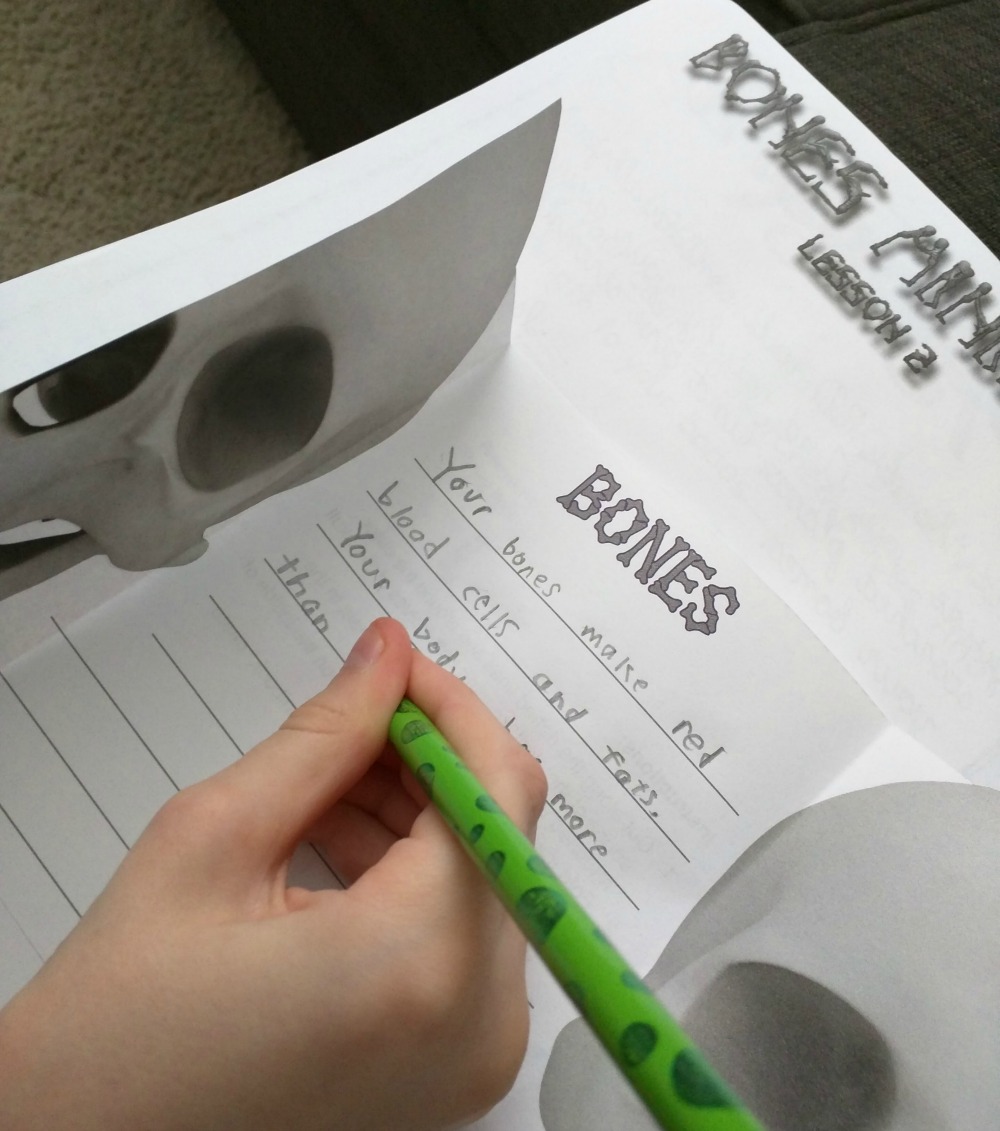
This product is perfect for your middle to upper elementary student who can handle a bit more writing. They don’t get the practice lines for their answers at this point. In this regular Notebooking Journal, students just get plain straight lines to write on.All of the great perks of the Junior Notebooking Journal apply in this older kid version, except instead of having coloring pages, they will have either more writing or puzzles like crosswords to fill out instead. They will have basically the same activities to do with each lesson and a very similar schedule, so it’s a breeze to combine students using the different level of notebooking journals. They can essentially be doing the same assignments at the same time, but it is on their own level of writing competence.As with the Junior Notebooking Journal, this one is a large spiral-bound paperback workbook. There are the mini-books in the appendix for students to assemble, the schedule is at the front of the book dividing the reading and the activities into a 2 day a week schedule, and there are copywork exercises for every lesson.
- Exploring Creation with Human Anatomy and Physiology MP3 Audio CD
If you have multiple students to teach, a new baby in the house, a work from home job, or just need a break from reading and doing it all, the audio CD version of the textbook can help you out! Listen to the author, Jeannie Fulbright, as she reads the Exploring Creation with Human Anatomy and Physiology textbook!
If you’re on the go a lot, this is also a good way to get some science lessons in when you might not be able to sit down and read the textbook together. I wish all textbooks came with an audio version.
As a family, we have been enjoying this curriculum. It has so many activities for students that like to learn in many different ways. I found my older and younger kids trying to work their way into our lessons because it just seemed too fun for them to miss out. It was engaging for everyone and I never heard any moans or groans about doing science.
We usually split the lessons into a 3 day a week schedule, so we would just highlight what we had completed as we finished things in the schedule part of the notebooking journals. My 5th grader used the regular Notebooking Journal, and my 2nd grader used the Junior Notebooking Journal. I would read the text aloud to them most days. There were a few times that we used the CD instead because I was tied up helping one of my other kids with something else, so it was convenient to have that as an option.

The textbook definitely has a Christian worldview. It does have a Creationist viewpoint, and students will be learning and referencing scriptures from the Bible as they complete the curriculum. I like that even though this is clearly religious, the text still went in depth about how things work and didn’t merely explain things with, “…because God,” like I’ve seen in other elementary science curriculums put out by Christian publishers. This one is meaty and will really make your kids think about how their bodies work.
See what other families thought of this Anatomy and Physiology curriculum! Click on the banner below for more reviews from other Crew members.


